Fine Motor Worksheets for Kindergarten

Helping students become confident with skills like writing and cutting is an important part of the kindergarten curriculum. One way that you can easily add some of this practice to your daily routine is with print-and-go activities. In this post, I’m going to share some of my favorite Fine Motor Worksheets for Kindergarten. These activities are engaging for students and easy to add to your daily lesson plans.
The Importance of Fine Motor Practice in Kindergarten
Children use fine motor skills throughout the day as they complete self-care tasks and navigate the classroom. From zipping their backpacks to writing their names on their papers, students need fine motor skills for daily living in addition to learning. This is why it’s so important to give students plenty of opportunities to improve their fine motor skills in kindergarten. The daily learning routine should include hand-strengthening activities that help students learn how to control classroom tools like scissors and glue.
When students have strong fine motor skills, they will be better able to navigate daily self-care tasks and learning activities. However, some students enter kindergarten with limited hand strength and coordination. This is why fine motor practice is such an essential part of the kindergarten curriculum. It gives kindergarteners the chance to become more confident with the tools they will use as students every day.
Fine Motor Worksheets for Kindergarten
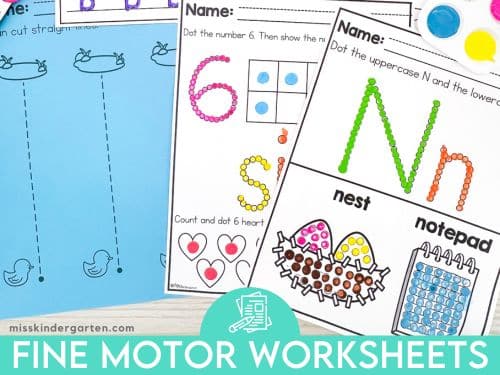
It’s nice to have hands-on activities for fine motor practice, like centers with engaging task cards and manipulatives. However, you can also help your students improve their hand strength, coordination, and scissor skills with no-prep printables. Here are some engaging fine motor worksheets that you can add to your daily learning routine.
1. Snipping Paper
Before students can practice cutting along lines, it’s helpful for them to get comfortable using scissors with open-ended snipping activities. These paper snipping worksheets are perfect! Students can snip small pieces of paper in different colors that they can then use to fill in the picture on the page.

This gives students the chance to get the hang of using scissors safely without having to worry about staying on a line. They can learn how much pressure they need to put on the scissors in order to make them cut. They can also get a feel for how to open and close the scissors with one hand while holding a piece of paper in the other hand.
2. Cutting Lines
Once students have had a chance to get the hang of using scissors, you can then have them try cutting along a line. These worksheets include a variety of different lines, so you can challenge students as they become more comfortable with using scissors.

Students can start by cutting in a straight line, then move on to angeled and wavy lines. This helps students practice adjusting the paper as they cut along the lines, which is important as they prepare to cut more precisely.
3. Cutting and Sorting
After practicing line cuts, students can apply their scissor skills to more challenging cutting tasks. For example, this sorting activity invites students to cut out the shapes that they will sort as part of the task.
Once students have cut out all of the shapes, they will then glue each one to the correct column on their shape-sorting paper. Even the process of flipping over the shapes, adding glue, and placing them on the paper is great for coordination and hand strength. These sorting activities are great for math centers!
4. Q-Tip Painting
Dot painting with Q-tips is such a fun way for students to strengthen their pincer grasp and coordination! Students love to fill in the small circles with dots of paint. They don’t even realize they’re hard at work building their hand muscles and strengthening their pencil grip!

These Q-tip painting worksheets include both letter and number practice, so you can include them in your literacy and math blocks. Students can paint the focus letter or number, then complete additional activities that will help them to strengthen their letter recognition and number sense.
5. Practicing Pencil Control
Learning how to hold and control a pencil is an essential skill that kindergarteners need to master as early as possible. This allows them to focus more on the concepts they’re learning with a task and less on the physical act of using the pencil to complete the activity. While students practice writing throughout the school day, it’s helpful to give them targeted practice with this skill.

Students can practice making a variety of pencil strokes as they trace lines, letters, and numbers. Each worksheet focuses on a specific letter that students can trace. It also includes lines that students can trace for additional fine motor practice. These lines are related to the pencil strokes that students will use for the featured letter. For example, students might practice side-to-side as well as up-and-down strokes for the letter I or curved strokes for the letter S.
Printable Fine Motor Practice Pages
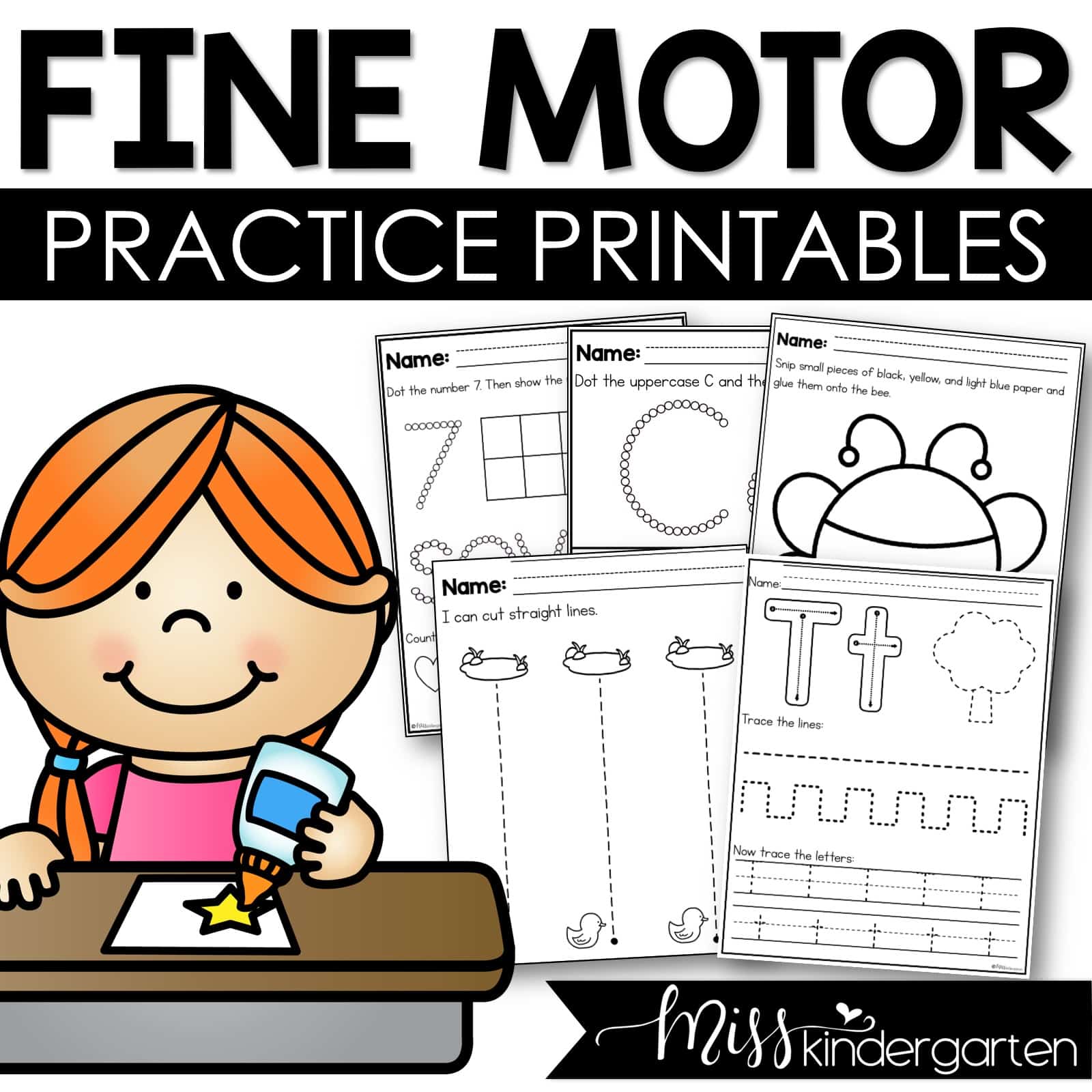
Would you like to use some of these worksheets to incorporate more fine motor practice into your classroom? I have put together a set of over 100 pages that you can use to help students improve their hand strength, coordination, scissor skills, and pencil control. These worksheets also incorporate academic practice like shapes, numbers, and letters, so you can use them throughout your daily lesson plans to add more fine motor practice to your curriculum. They are perfect for morning work, centers, homework, early finishers, and more!
If you’d like to take a closer look at everything included in this set of fine motor activities, just click below to find this resource in my shop.
Scissor Skills Cutting Practice Worksheets
Save These Kindergarten Fine Motor Worksheets
Be sure to save this post so you can come back to it later! Just add the pin below to your favorite Pinterest board of kindergarten fine motor activities. You’ll be able to quickly find these printable activities when you’re looking for an easy way to add more fine motor practice to your daily learning routine.