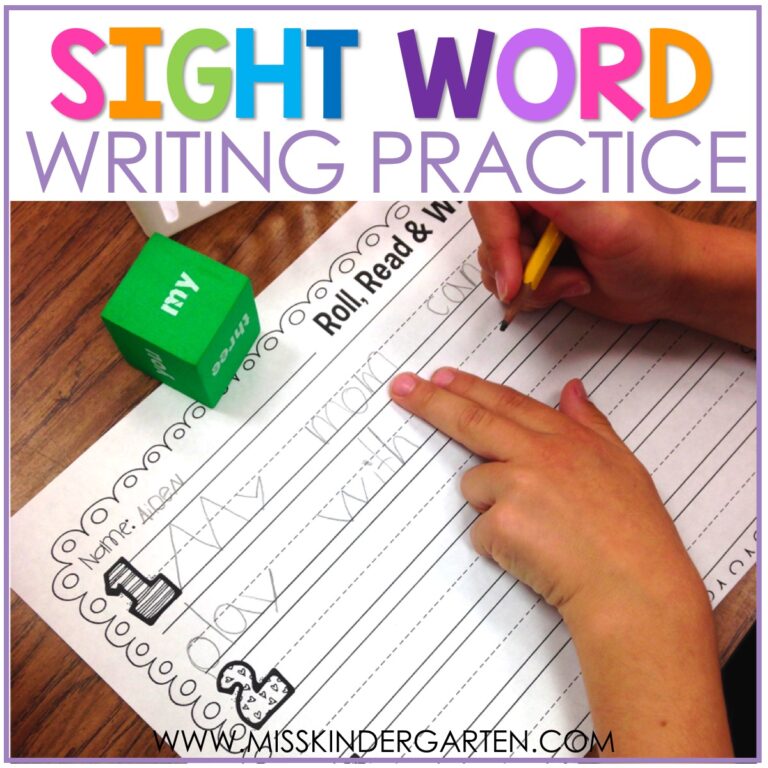
5 Ways to Use Phonics Visual Aids in Kindergarten

When we think about kindergarten visual aids, we often think about classroom management visuals that help the day run more smoothly. However, visuals can also be a very helpful addition to kindergarten literacy instruction. In this post, I’m going to share several ways to use Phonics Visual Aids in the kindergarten classroom.
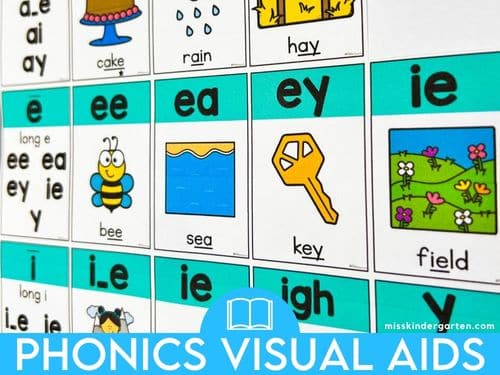
The Importance of Visuals in Kindergarten
Young kindergarten students are still developing their language skills and their ability to follow multi-step directions. This is why visuals are such a helpful part of the daily learning routine! Visual aids give students something to reference as they process directions. This can help them navigate learning tasks with more independence and confidence. Plus, they can help students recall important information that they’ve learned.
5 Ways to Use Visual Aids for Phonics
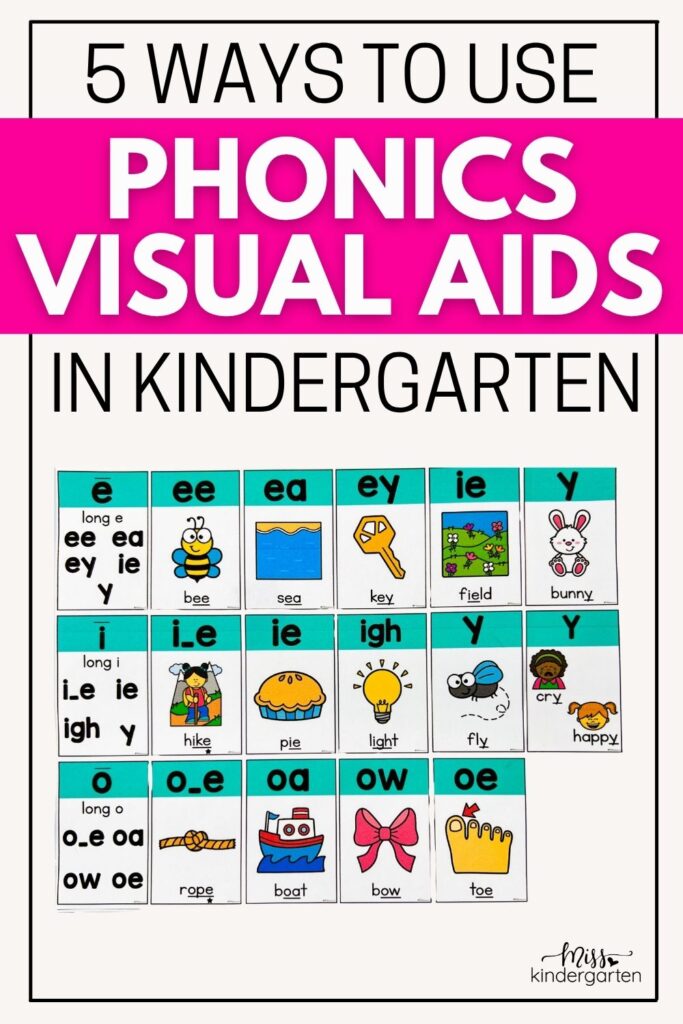
Visuals can be especially helpful for phonics instruction and practice! That’s why I’ve put together a set of phonics posters. These are more than a cute decoration for your classroom! Here are several ways that you can incorporate phonics visual aids into your daily learning routine.
1. Enhance Phonics Instruction
First, they are a great way to enhance your phonics lessons. As you introduce letter sounds during phonics instruction, you can use corresponding visual aids to make the lesson content more accessible to your students. Enhancing your phonics instruction with visuals can keep students engaged in the lesson and help them process what they are learning.
When you use phonics visuals with a consistent format, it can help to create an effective phonics instructional routine. Young kindergarten students thrive on consistency and predictability! The new picture for each phoneme is enough to grab their attention, but the consistent format means they can quickly find the information they need on the poster.`
2. Highlight Phoneme-Grapheme Correspondence
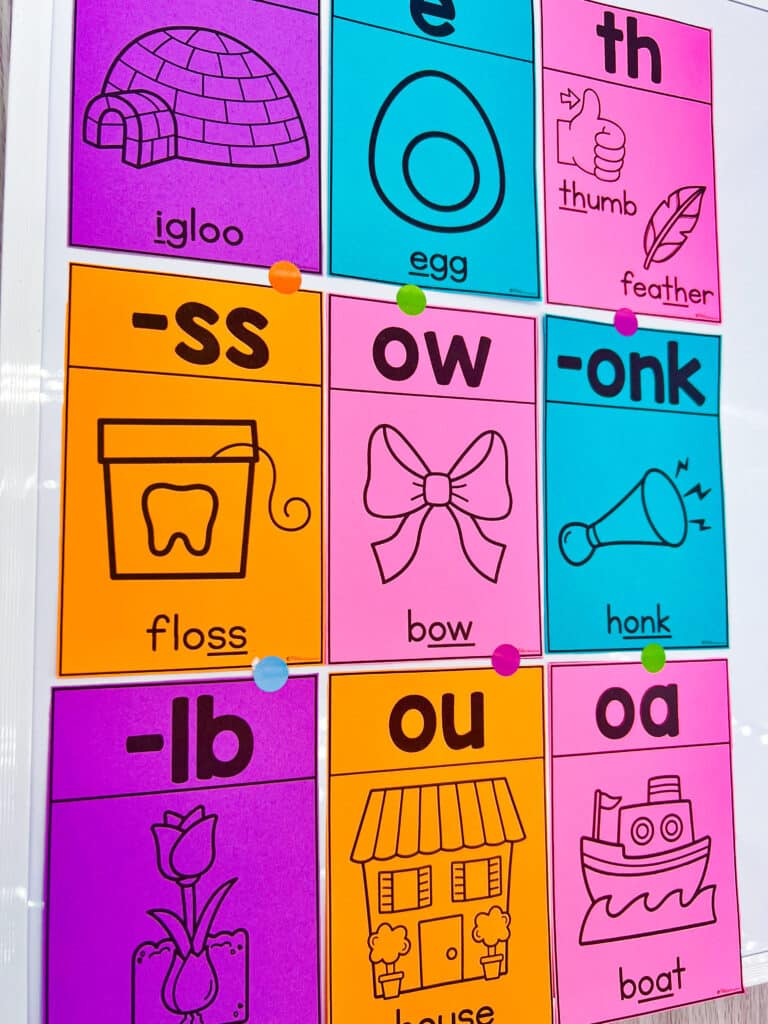
After students learn about the individual sounds of the letters of the alphabet, it’s time for them to learn about the other sounds that make up words. As students learn about blends, digraphs, diphthongs, and vowel teams, it’s important for them to learn about the different ways these phonemes are represented in print. Phonics visuals can help you highlight this phoneme-grapheme correspondence.
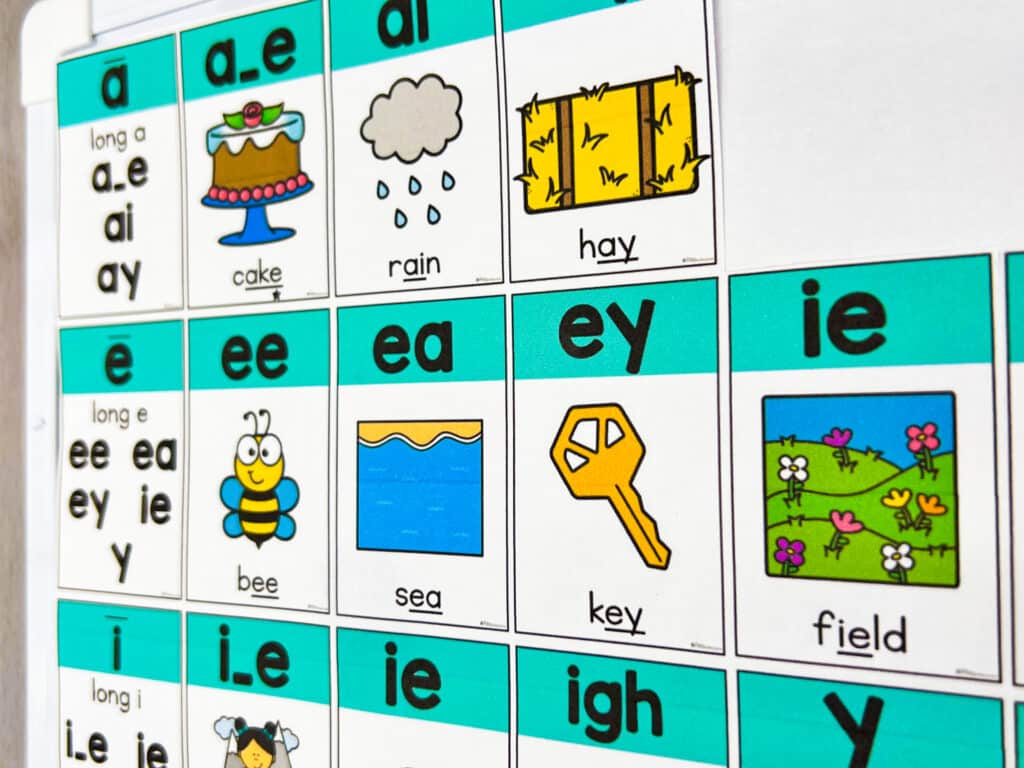
For example, on each phonics poster that I’ve created, there is a word that contains the target phoneme. In that word, the grapheme is underlined so that students can see at a glance the letters that are used to make that target sound. Since this is the format of every poster, students will know what to look for when they’re trying to see how the phoneme is represented in words.
3. Increase Independence During Centers
Just like classroom management visuals can help students navigate the school day with more independence, phonics visual aids can help students be more independent during literacy centers. For example, if students are working on a task that requires them to sort cards by phoneme, you could include phonics visual aids for the phonemes they will be focusing on during that task. This can serve as a reminder for the students and help them complete the task more independently.
You could also use phonics visual aids to help students be more independent during writing centers. If you have an area of your classroom dedicated to writing, you could display the phonics posters nearby. This can help students be more confident and independent as they try to think of the spelling patterns they want to use in their writing. You could even print the posters in a size that would allow you to create a folder for students to flip through to find what they need as they work on their writing.
4. Build Automaticity
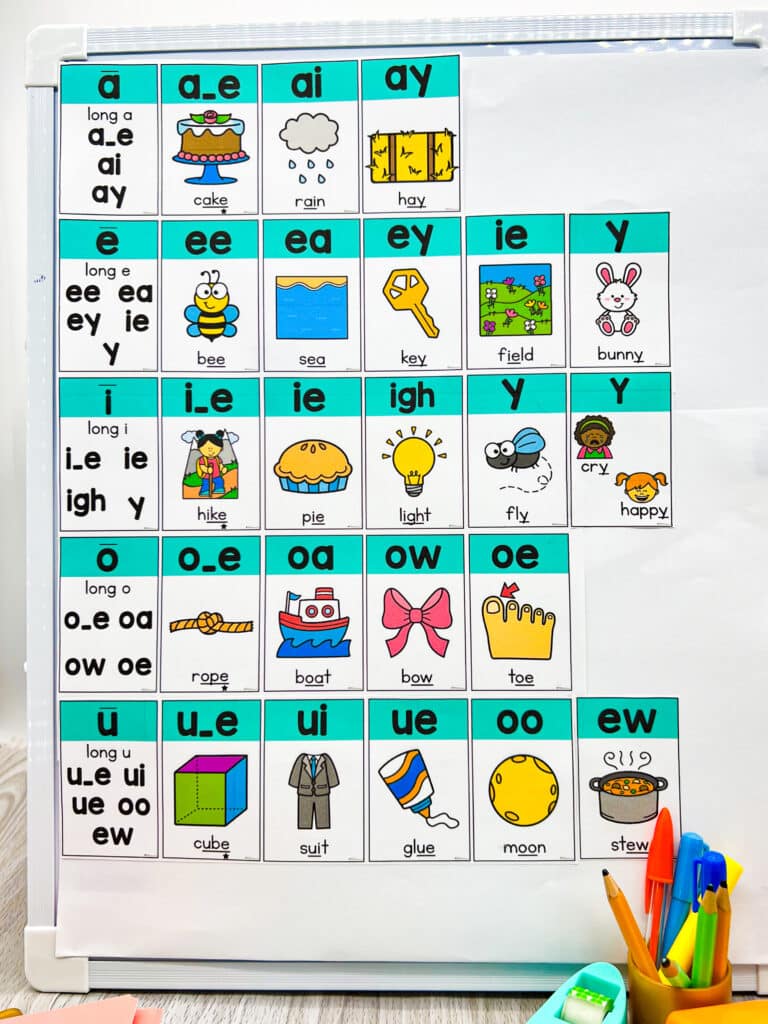
You can also use visual aids to help students recognize phonemes with more automaticity! Simply print off the phonics posters in a smaller size and use them as flashcards. You can review phonemes with your students during transition times, before small group lessons, or even at the carpet during calendar time. This additional practice with phonemes can be such a valuable way to build fluency and automaticity with your kindergarteners.
5. Anchor Learning
Finally, phonics visual aids are an excellent way to anchor learning in your classroom. By displaying phonics posters on a wall or bulletin board, you can create a valuable resource that you and your students can revisit as needed throughout the school year. The more you reference these posters, the more likely your students will be to access this resource without prompting. This is the goal of using anchor charts and visual aids!
I hope this post has given you some ideas for how you can make the most of phonics visual aids in your classroom! This truly is a great way to support your kindergarteners as they deepen their understanding of phonemes and graphemes.
Printable Phonics Posters for Kindergarten
If you’d like to add phonics posters to your classroom, be sure to check out my set of over 150 posters! This set of phonics visual aids includes many different phonemes beyond the individual letters of the alphabet. Each poster has a kid-friendly picture and a corresponding word with the grapheme underlined.
The posters come in a vibrant, full-color option that is ready to print and hang! If you don’t have access to a color printer or you want to save your colored ink, there is also a blackline option that you can print onto your choice of color paper. You can also adjust the scale to print them in a size that would work best for your classroom.
If you’d like to take a closer look at all of the phonics patterns included in this set of posters, just click below to find this resource in my shop.
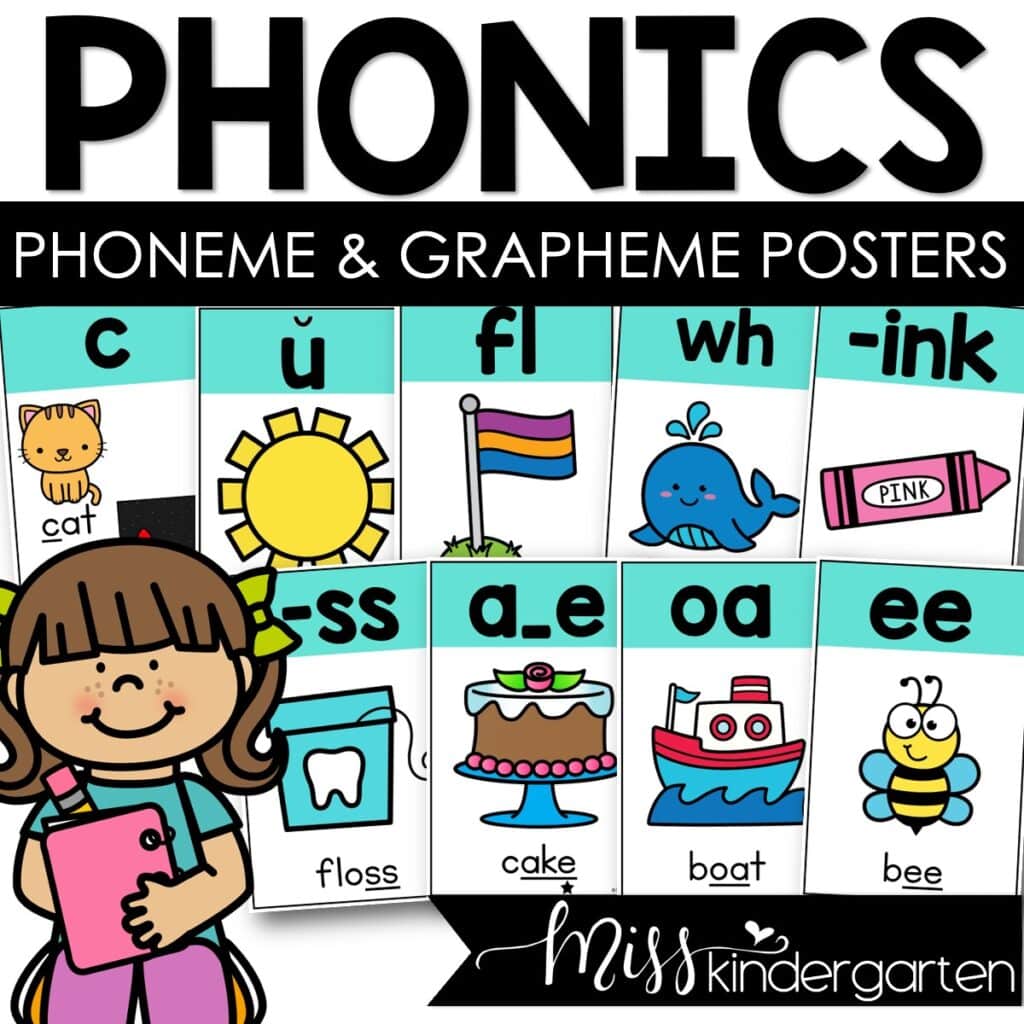
Phonics Posters and Rules Kindergarten Phonics Practice Sound Wall Cards
Save These Tips for Using Phonics Visual Aids
Be sure to save this post if you’d like to come back to it later! Just add the pin below to your favorite kindergarten literacy board on Pinterest. You’ll be able to quickly find this post when you’re looking for ways to enhance phonics instruction with visuals.